
![[NANIKA]](https://nanikajapan.com/wp-content/uploads/2024/10/cropped-NANIKA-LOGO-transp.png)
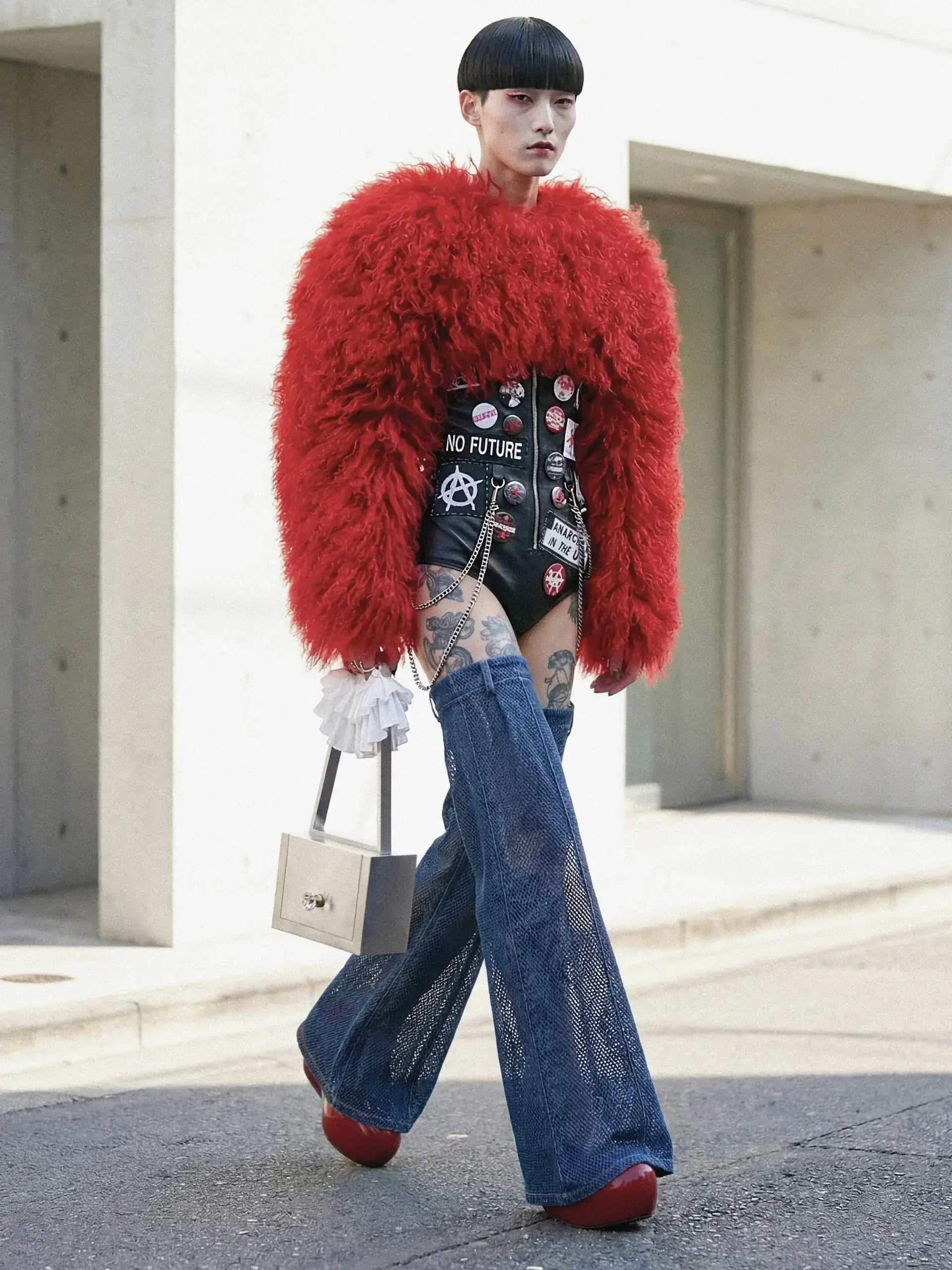
In Japan, a society deeply rooted in conformity where “the nail that sticks out gets hammered down,” the arrival of punk in the late 1970s was not an explosion, but a quiet infiltration. This loud, confrontational, and unapologetically Western movement found an unlikely resonance among Japanese youth, leading to a unique cultural phenomenon: a transformation of rebellion into a distinct Japanese icon. Rather than mere imitation, Japanese punk became a profound narrative couture, evolving from raw music and defiant aesthetics into a sophisticated form of cultural expression. Its journey is a compelling study of adaptation, where a global movement was localized, imbued with distinct cultural meaning, and ultimately, reimagined.
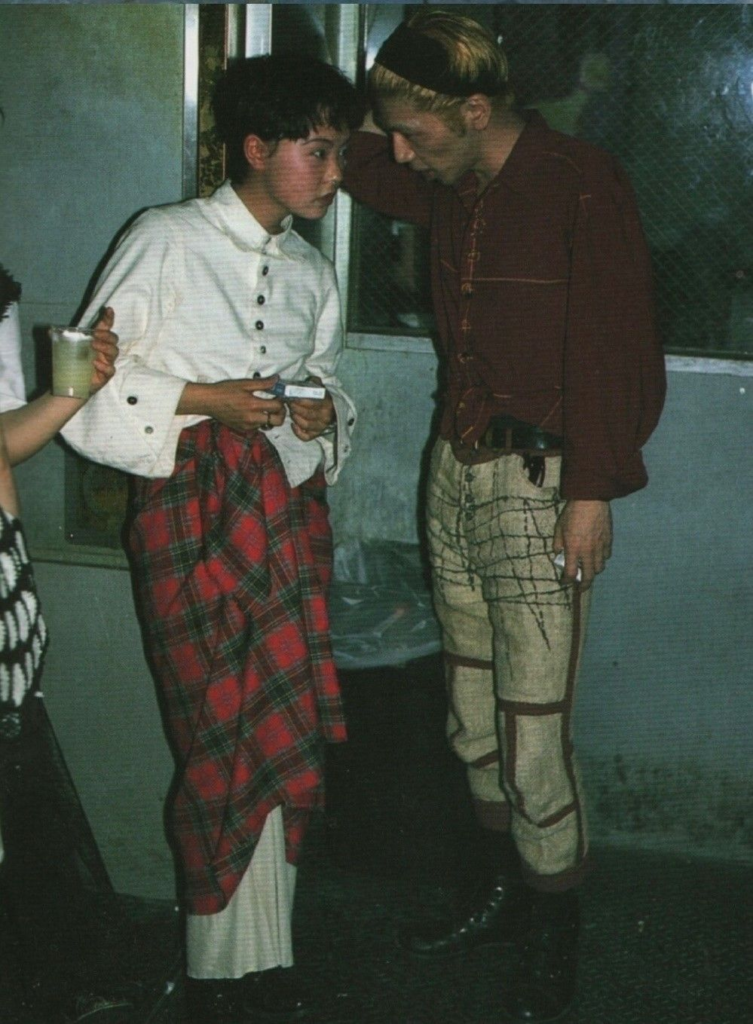
The genesis: from proto-punk to Japcore
Before punk became a global phenomenon, Japan harbored its own agitators. In the 1970s, underground bands like Les Rallizes Dénudés, Zuno Keisatsu, and Maruhachibu blurred music, performance, and provocation, challenging both sonic norms and social order. Influenced by psychedelic rock and avant-garde art, these groups laid the groundwork, priming the cultural landscape for punk’s arrival.
By the late 1970s and 1980s, punk arrived, inspired by Western pioneers like the Sex Pistols and The Ramones. Japanese youth swiftly adopted its codes, but with a unique mutation. This period saw the rise of Japanese Hardcore (Japcore), with bands like GISM, The Stalin, Gauze, Confuse, and Lip Cream, pushing punk to extremes: faster, harsher, and almost ritualistic.
Unlike Western punk’s outward political rage, Japcore often turned inward, expressing rebellion as a means of surviving the pressures of Japan’s “bubble economy” era—a time of rapid growth, consumerism, and societal conformity. Young people faced relentless academic pressure, the specter of karoshi (death by overwork), and suffocating social expectations. This intense sound became a “primal scream” against a perceived sterile society, channeling aggression into a focused, aesthetic release rather than overt political action.
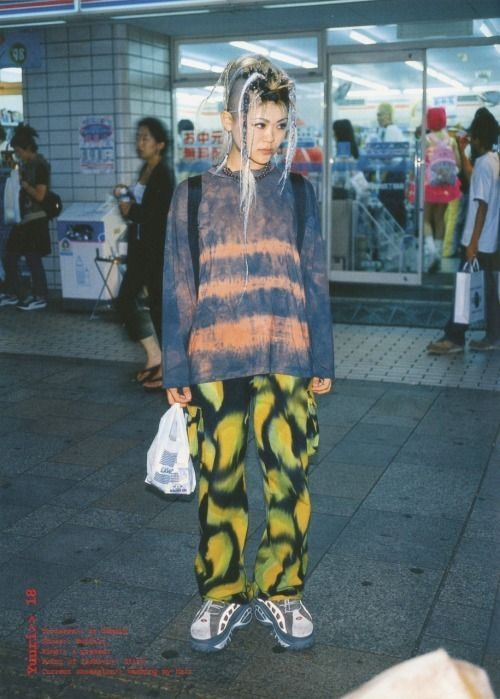
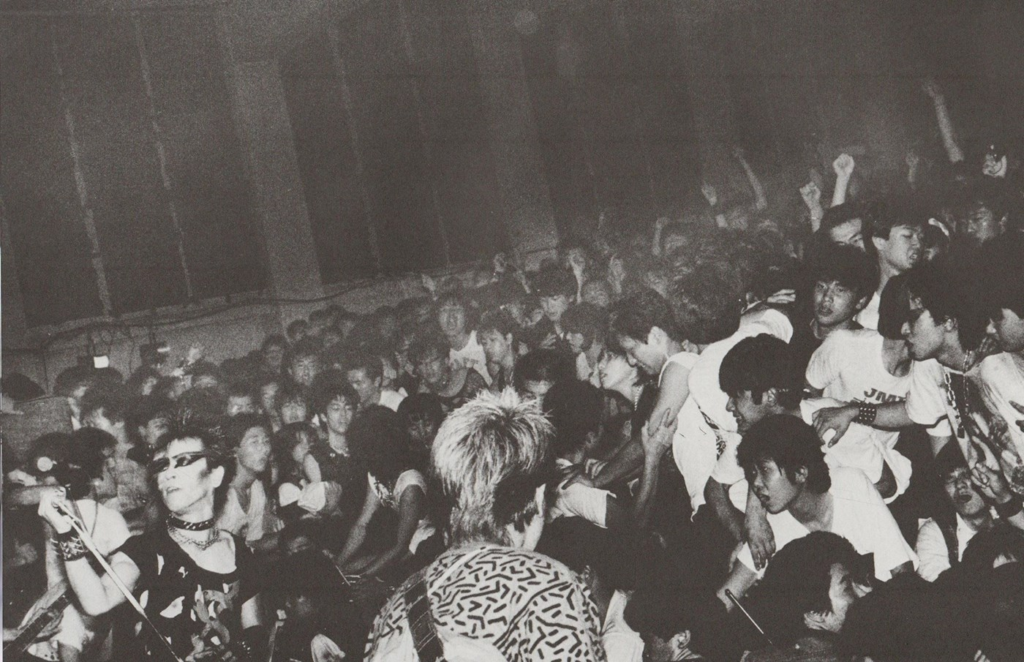
Japanese punk cultivated a signature blend of confrontational energy with remarkable artistic precision. This was evident in intricately structured musical arrangements, meticulously crafted aesthetics, and a deep dedication to craft, even within punk’s chaotic framework. It fostered a vibrant subculture that became uniquely Japanese, driven by a robust DIY (Do-It-Yourself) ethic. This self-sustaining ecosystem thrived through independent labels like Dogma Records, ADK Records, and Selfish Records, alongside seminal venues such as Shinjuku Loft and Gundom. These spaces became sacred, almost ritualistic—at Shinjuku Loft, the boundary between performer and audience dissolved, fostering an intimacy unthinkable in Western punk clubs. Fanzines like Doll Magazine and Fool’s Mate further connected these disparate scenes, solidifying a collective identity that allowed Japanese punk to flourish autonomously.
As this ecosystem thrived, brands like Hysteric Glamour (founded 1984 by Nobuhiko Kitamura) brought punk aesthetics directly to the streets—graphic tees, DIY ethos, direct visual quotation. This streetwear approach ran parallel to, but distinct from, the conceptual transformation happening in haute couture.
From street rebellion to expressive couture: the designer’s manifesto
The raw energy of Japanese punk, once channeled primarily through Japcore’s primal scream and underground venues, fundamentally evolved into a distinct form of expressive couture. Designers, moving beyond literal reproduction, masterfully translated punk’s inherent spirit—tension, alienation, refusal, and fragility—into silhouette, construction, and narrative.
This transformation highlights a uniquely Japanese rebellious ethos already present in Japcore’s synthesis of aggression and precision: controlled disruption with deliberate gender ambiguity over loud destruction, intentional imbalance with intricate layering over overt shock. Clothing became a powerful medium for storytelling—each garment a precise and persistent articulation of dissent.
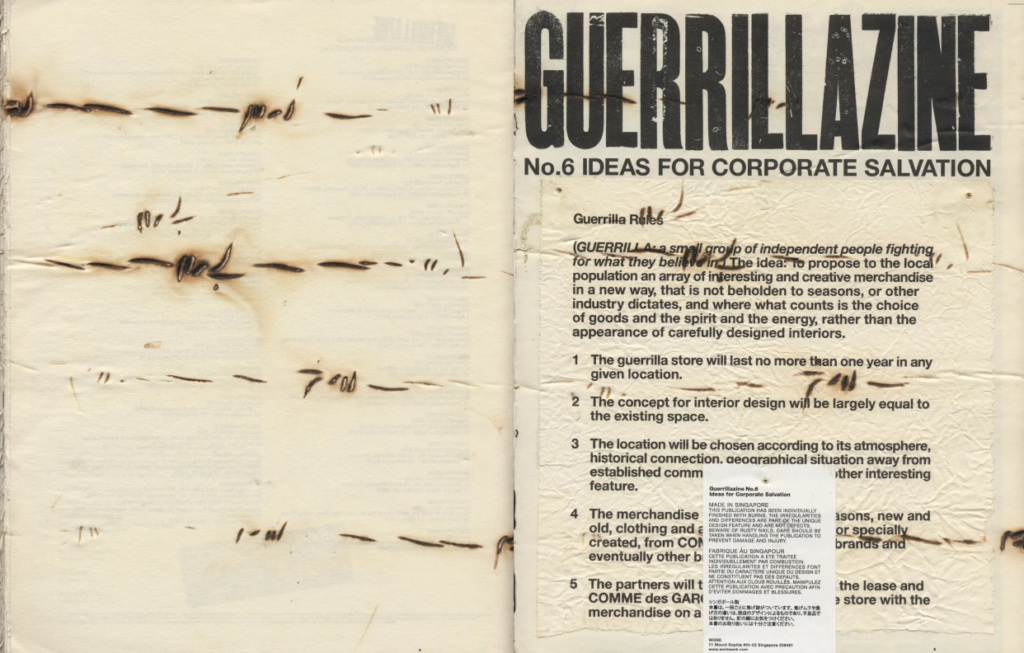
Architects of dissent: key designers
- Rei Kawakubo (Comme des Garçons): Pioneer of anti-fashion. Her work, characterized by asymmetry, deconstruction, and a rejection of conventional beauty, embodied the punk spirit without explicit declaration. Her early collections—controversially dubbed ‘Hiroshima Chic’ by Western press—were a global redefinition of dissent through design, challenging every assumption about femininity and form.
- Yohji Yamamoto: A fellow pioneer of radical deconstruction, yet punk in a more solitary, melancholic register. Where Kawakubo wages conceptual war against the establishment, Yamamoto mourns it—his signature black, oversized silhouettes less a rejection of beauty than an elegy for it. The dissidence is quieter, but no less uncompromising.
- Junya Watanabe : A master of technical deconstruction with an unmistakably punk sensibility. Trained under Kawakubo, Watanabe pushed deconstructivism further into engineered experimentation—his collections routinely dismantling garment architecture only to reassemble it into something deliberately confrontational. His recurring engagement with workwear and subcultural references—biker, military, street—grounds punk not in aesthetics but in the lived experience of outsiders.
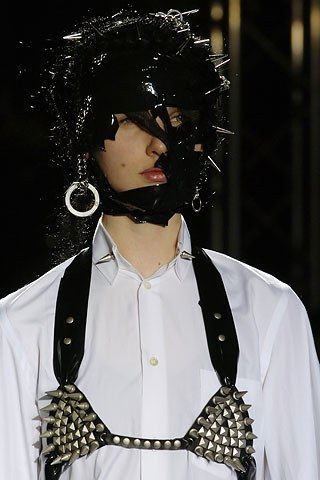
- Undercover (Jun Takahashi): Directly rooted in punk since its 1993 founding. Takahashi transformed rebellion into narrative fashion, his collections consistently referencing music and literature to portray fragility, alienation, and contradiction—punk as an emotional landscape, not just a uniform. His work asks: what if punk’s true power lies not in destruction, but in vulnerability?
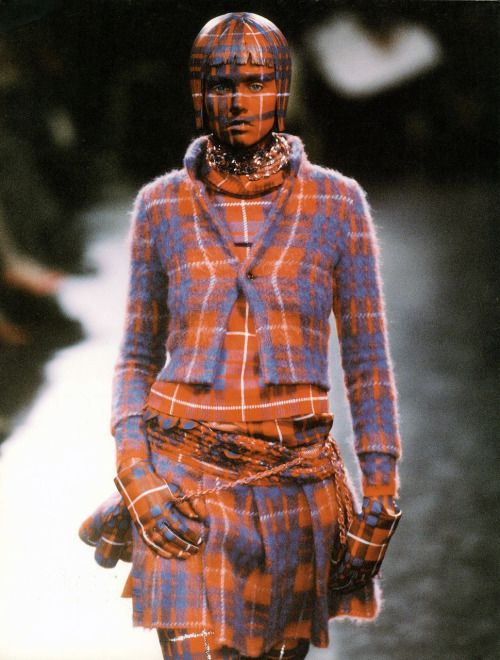
- Takahiro Miyashita (Number (N)ine, The Soloist): Explored punk through a romantic and introspective lens. Influenced by music and personal obsessions, his designs evoke melancholic, fragile, and intensely personal narratives—punk as solitary alienation rather than collective revolt. Number (N)ine (1996) became legendary for this introspection; The Soloist continues the legacy.
These designers did not merely adopt punk aesthetics—they fundamentally reimagined rebellion as a permanent design language, one that would transcend its subcultural origins to reshape Japanese culture itself.
The persistence of punk as method
Japanese punk did not disappear; it evolved into something sharper and more enduring—a design methodology embedded in cut, proportion, and intention. No longer a scream, but a persistent whisper of refusal that continues to shape both emerging designers and the way Japanese fashion is preserved, collected, and understood.
New generations, same spirit
Contemporary designers continue to draw from punk’s aesthetic vocabulary, not as nostalgia but as living language. Brands like Sulvam (Teppei Fujita), Kidill (Hiroaki Sueyasu), and Bodysong (Tae Ashida) demonstrate punk’s ongoing mutation: Sulvam’s deconstructed tailoring channels aggression through precision; Kidill explicitly references punk subculture while interrogating gender through exaggerated silhouettes; Bodysong translates rebellion into experimental textiles and graphic disruption. These designers prove that punk in Japan was never a moment—it became a method, a way of questioning form itself.
Vintage as cultural archive
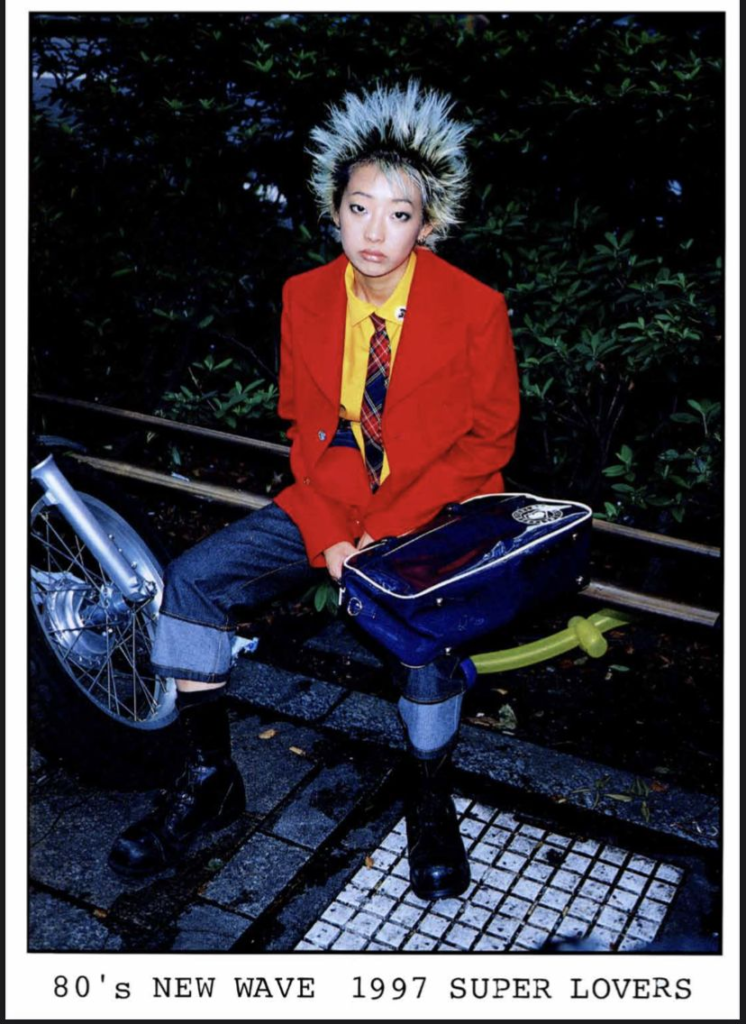
The proliferation of specialized vintage stores across Tokyo, Osaka, and Kyoto reveals something profound: these are not merely shops but altars, preserving not garments but a way of seeing. Establishments dedicated to archiving 1980s-90s Japanese punk fashion—from original Undercover pieces to rare Number (N)ine archives—function as living museums. Here, punk’s legacy is tangible: you can trace the evolution of a silhouette, understand how a seam became a statement, witness the transformation of rebellion into craft. This ecosystem of preservation ensures that punk’s design language remains accessible, studied, and reinterpreted by each new generation.
Punk is still living on the streets
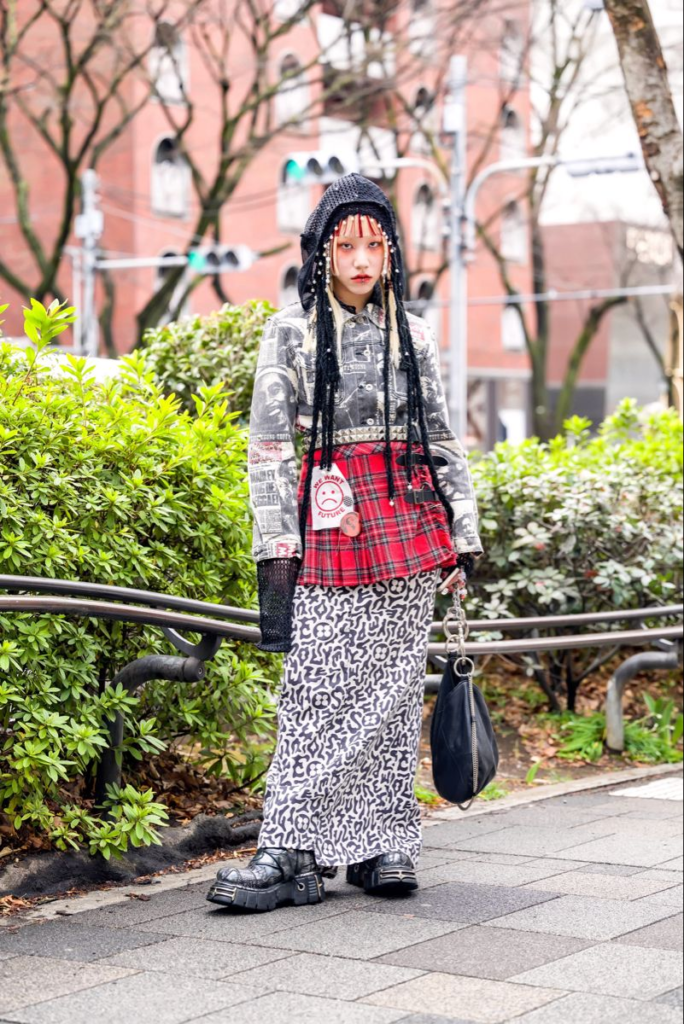
Beyond the runway, punk’s visual language remains vividly present in contemporary Japanese street style. Walk through Harajuku, Shimokitazawa, or Koenji today and witness its persistence: oversized silhouettes layered with deliberate asymmetry, safety pins reimagined as decorative hardware, tartan and plaid subverted through unexpected pairings, DIY customization as personal manifesto. Yet this street-level expression differs fundamentally from Western punk pastiche—it’s not nostalgia or costume, but an ongoing dialogue with the design methodology established decades prior. The boundary between “street” and “designer” in Japan has always been porous; the same individuals hunting vintage Undercover pieces might layer them with Carhartt workwear and customized denim, creating a vernacular that honors punk’s spirit of refusal without reproducing its uniform. This living, breathing streetwear ecosystem ensures that punk’s energy circulates beyond museum-like vintage archives, continually reinterpreted by each generation navigating Tokyo’s sidewalks.
In Japan, where “the nail that sticks out gets hammered down” once dictated conformity, punk rewrote the proverb entirely. The nail that stuck out was not hammered—it was sharpened, refined, and transformed into a blade of creativity that continues to cut new paths in global culture. What began as a borrowed rebellion became something distinctly Japanese: not louder, but deeper; not destructive, but reconstructive ; not a moment, but a method that refuses to fade.
Leave a Reply