
![[NANIKA]](https://nanikajapan.com/wp-content/uploads/2024/10/cropped-NANIKA-LOGO-transp.png)
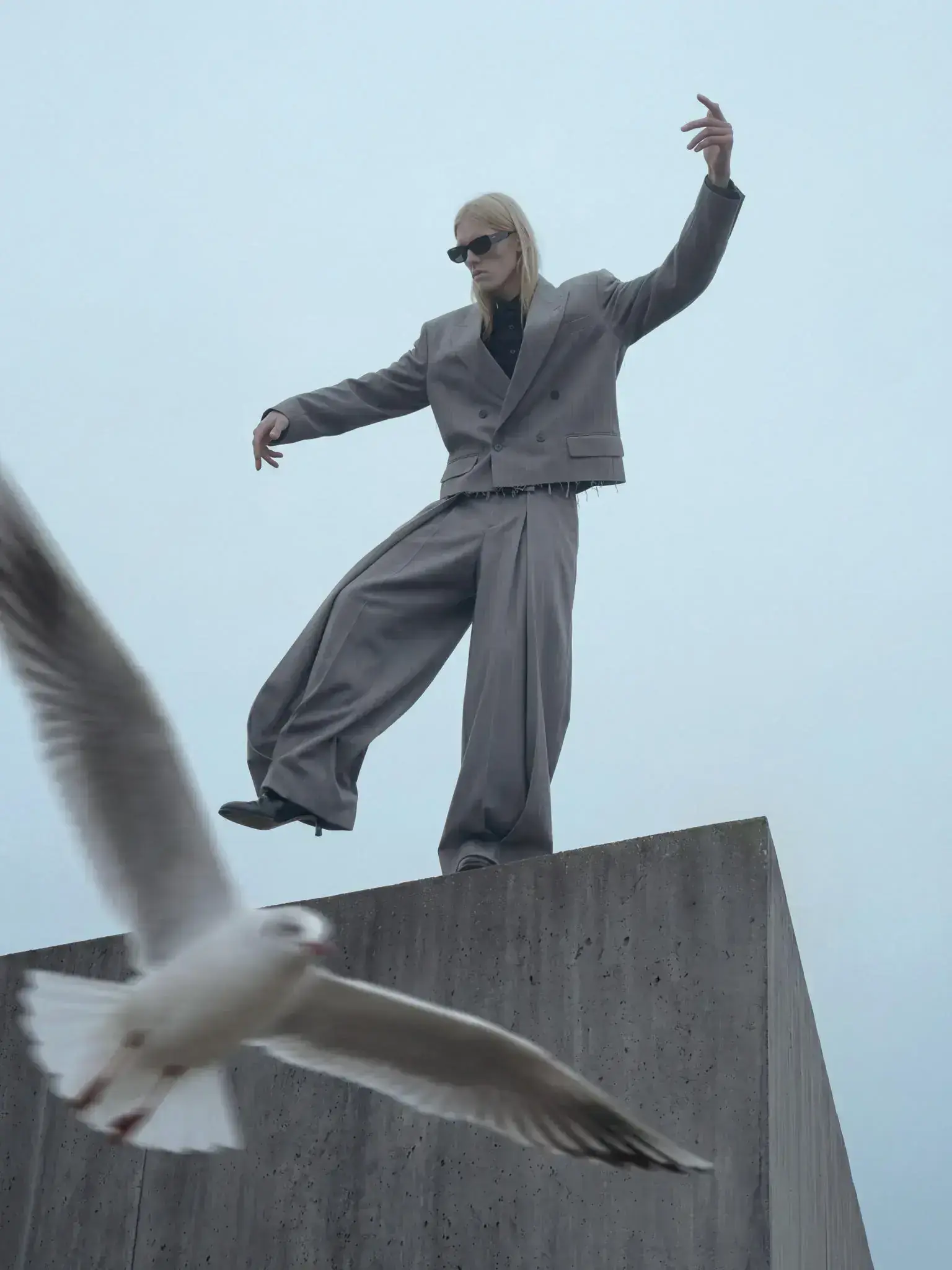
How John Lawrence Sullivan holds raw strength and refinement in perfect tension
There is a specific feeling a John Lawrence Sullivan garment produces — something between being armored and being dressed. Both at once, without contradiction. Twenty-three years later, Arashi Yanagawa’s intention remains unchanged: to design clothes that give those who wear them confidence, and the courage to face whatever room they walk into.
The ring as method
Arashi Yanagawa founded JLS in Tokyo in 2003 without any of the credentials the fashion industry typically expects. Self-taught and a former professional boxer from Hiroshima, he had no apprenticeship at a major house, no formal training in pattern-making or garment construction. What he had instead was a decade spent understanding how a body moves under pressure — how it defends, absorbs, strikes. That understanding never left his designs: garments of exceptional refinement — meticulous tailoring, proprietary fabrics, architectural precision in every cut — that simultaneously feel built to take a hit. This central paradox is what gives JLS its enduring power.
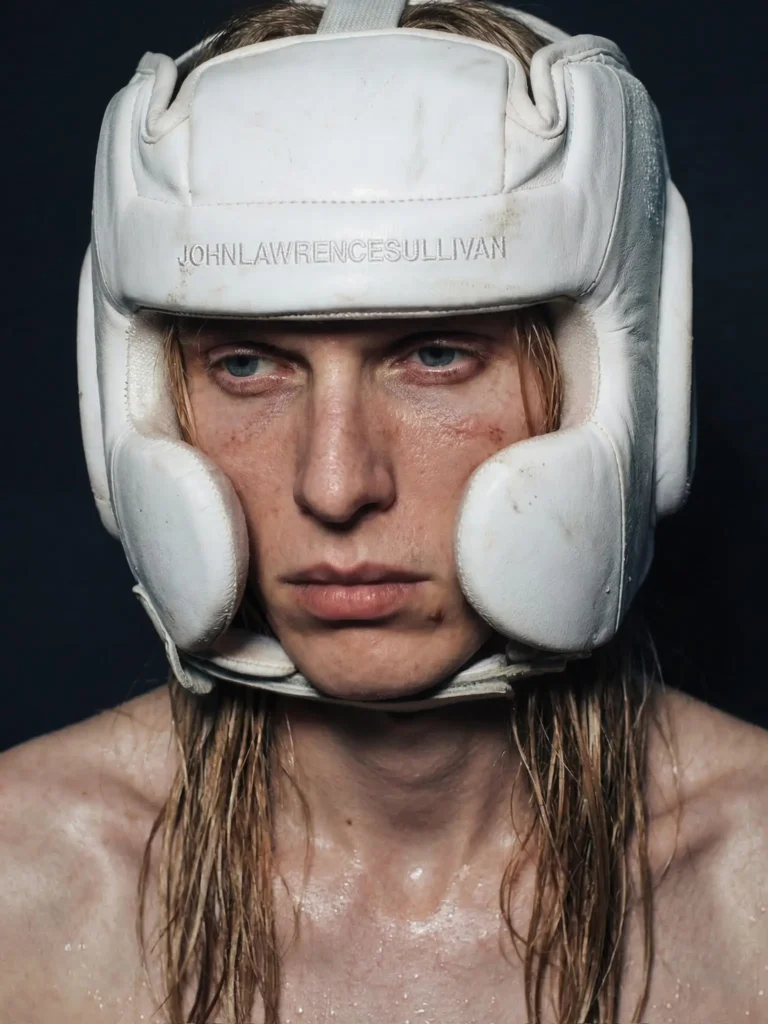
Yanagawa started boxing at twelve. He won the national amateur flyweight title, was considered an Olympic candidate, then turned professional for four years. Four years spent learning what serious preparation looks like — what it means to build for months toward something that lasts only minutes, and then begin again from zero.
His entry into fashion did not come through Tokyo street culture. By his own admission, he was more interested from a young age in traditional clothing and authentic garments than in the subcultural energy surrounding him. The turning point came in London, where an encounter with vintage tailored jackets changed everything.
“I was strongly drawn to them. That experience led me to create my own jacket from my own perspective — which became the starting point.” Arashi Yanagawa
Against the backdrop of Tokyo’s intense creative energy, Yanagawa began his fashion journey with a single garment, driven by an immediate fascination and a need to insert his own voice into that tradition.
His first Tokyo show, Spring/Summer 2007, was organized around the concept of the “blue corner” — the position assigned to the visiting fighter in Japanese boxing. The outsider. The challenger. The one who has to earn the room before anyone in it takes him seriously.
Combative Tailoring
In his approach to tailoring, Yanagawa starts from classical sartorial forms — the structured jacket, the elongated coat, the precise trouser — and subjects them to a kind of controlled violence. Proportions are displaced. Shoulders exaggerated. Sleeves repositioned to suggest the forward hunch of a fighter’s guard. The result is tailoring that feels both exact and combative: refined in construction, raw in force.
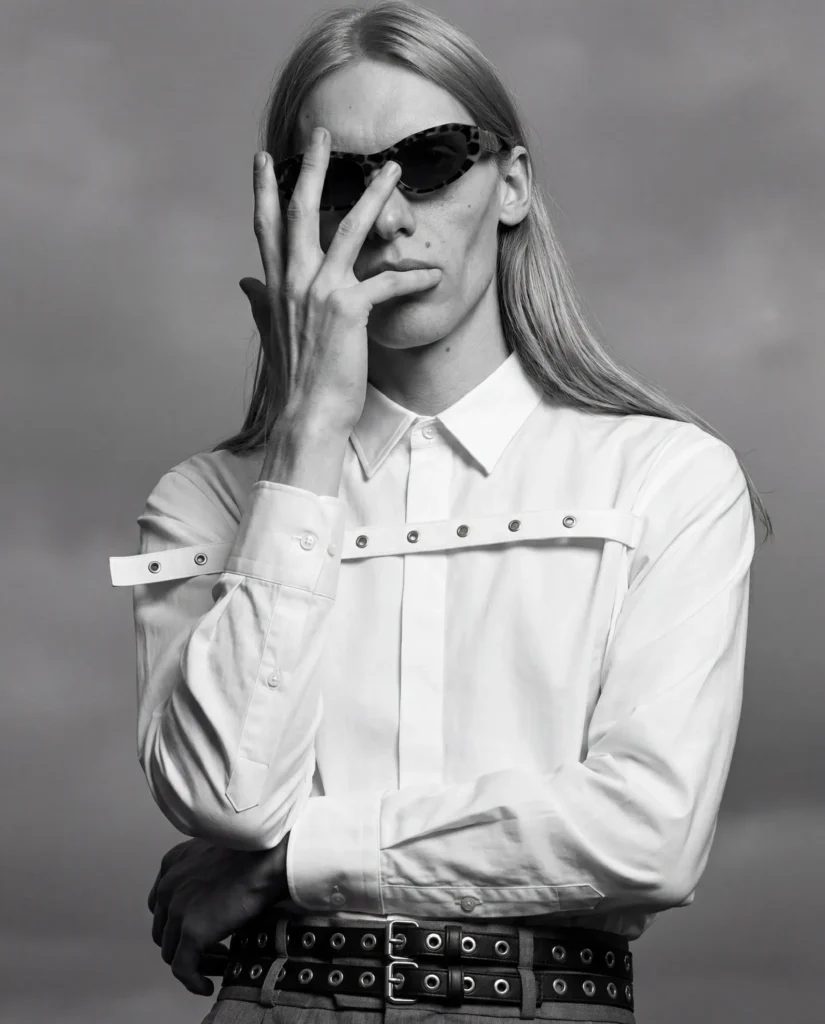
The AW25 collection, drawn from the work of Anselm Kiefer, made this explicit. Exaggerated sleeves dominated the menswear, their swollen curves offering a distorted homage to wartime uniforms. Tailored jackets, biker leathers, and denim were imbued with sculptural drama, evoking the protective allure of armor. Each garment radiated what one critic described as a charged elegance — an alchemy of brutality and grace. The reference to Kiefer was not incidental: his work is built around the same tension — beauty and destruction, precision and ruin held in uneasy coexistence.
Most recently, following his participation in Berlin Fashion Week’s INTERVENTION program and a prize win at the Berlin Contemporary competition – a platform for designers working at the intersection of innovation, sustainability, and ambitious show concepts – John Lawrence Sullivan showcased once again in Europe. Showing his AW26 collection at Kraftwerk Berlin, the industrial venue that houses famous techno club Tresor, the designer pushed the boxing silhouette to its most literal extreme. Hero pieces — long coats, tailored jackets, bombers and biker jackets — were structured around a boxer’s crouching stance: sleeves dramatically shifted forward, volume exaggerated, shoulder lines drawn toward the front to direct the wearer into a guarded, inward posture.
Accessories densely embedded with regimented stud work functioned less as decoration than as structural devices generating tension. The atmosphere was shaped by composer Jonas Karsten, whose spatial soundscape built a bridge toward Nordic black metal — a world Yanagawa discovered through trips to Scandinavia, where friends host outdoor gatherings in winter forests.
“Tailoring is the strong core of our brand (…) Once I define a concept, I always think carefully about how it can be connected to tailoring and expressed as a new world within JLS. If something doesn’t connect to that core — even if it’s an interesting idea — I choose to leave it out.”
Therefore, when Yanagawa works with leather, denim, raw hardware, or Kiefer’s post-war darkness, these elements never arrive as decorative additions. They are absorbed into an underlying system and emerge transformed, carrying the JLS signature rather than their own.
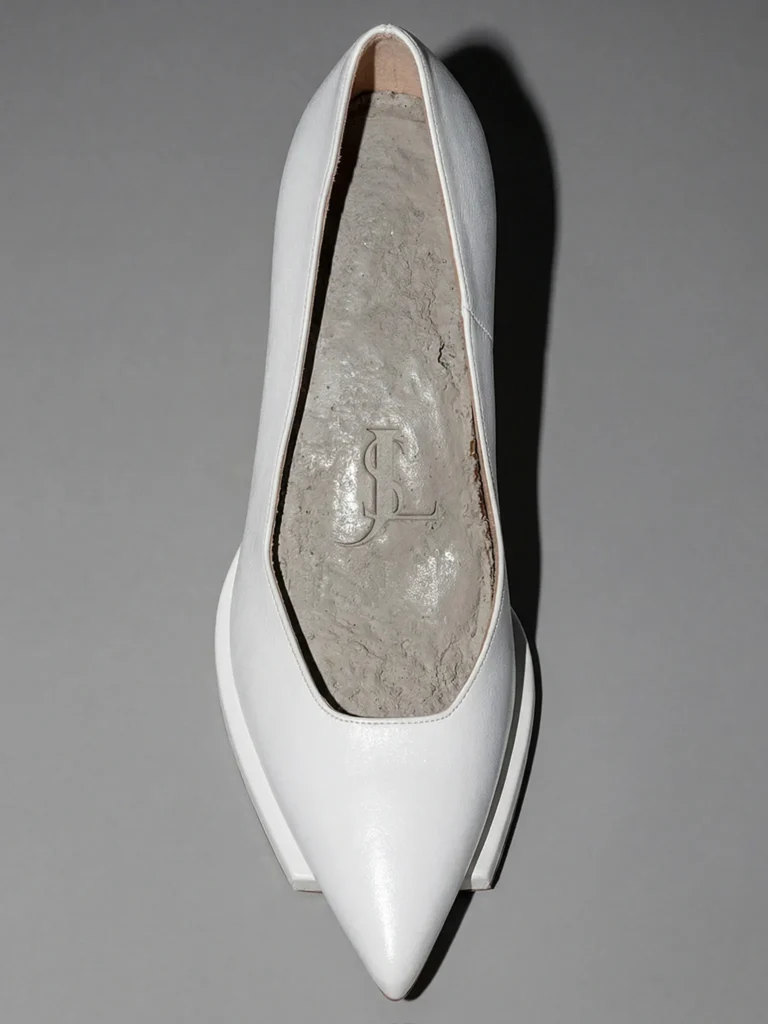
The filter remains constant, and it begins before the fabric is even chosen. Original textiles — proprietary weaves and textures developed specifically for each collection, produced almost entirely in Japan — begin neither with silhouette nor material, but with concept itself.
Each season proposes a different world, yet each remains unmistakably JLS.
John Lawrence Sullivan’s Own Language
JLS belongs to a specific moment in Japanese fashion history — the generation that came of age in late-1990s and early-2000s Tokyo, shaped less by the conceptual radicalism of Rei Kawakubo and Yohji Yamamoto than by the subcultural energy of Harajuku, Ura-Harajuku, and the ecosystem that produced labels such as Undercover, Neighborhood, and Number (N)ine. These were designers who grew up absorbing punk, grunge, British tailoring, American workwear, and Japanese craftsmanship simultaneously, building vocabularies through collision rather than through a single theoretical doctrine.
What distinguished JLS, even within this landscape, was the source of its tension. Yanagawa’s boxing background gave the brand a physical specificity most contemporaries did not possess: the force inside a JLS garment is not borrowed from music or subcultural imagery, but derived from a direct bodily understanding of impact.
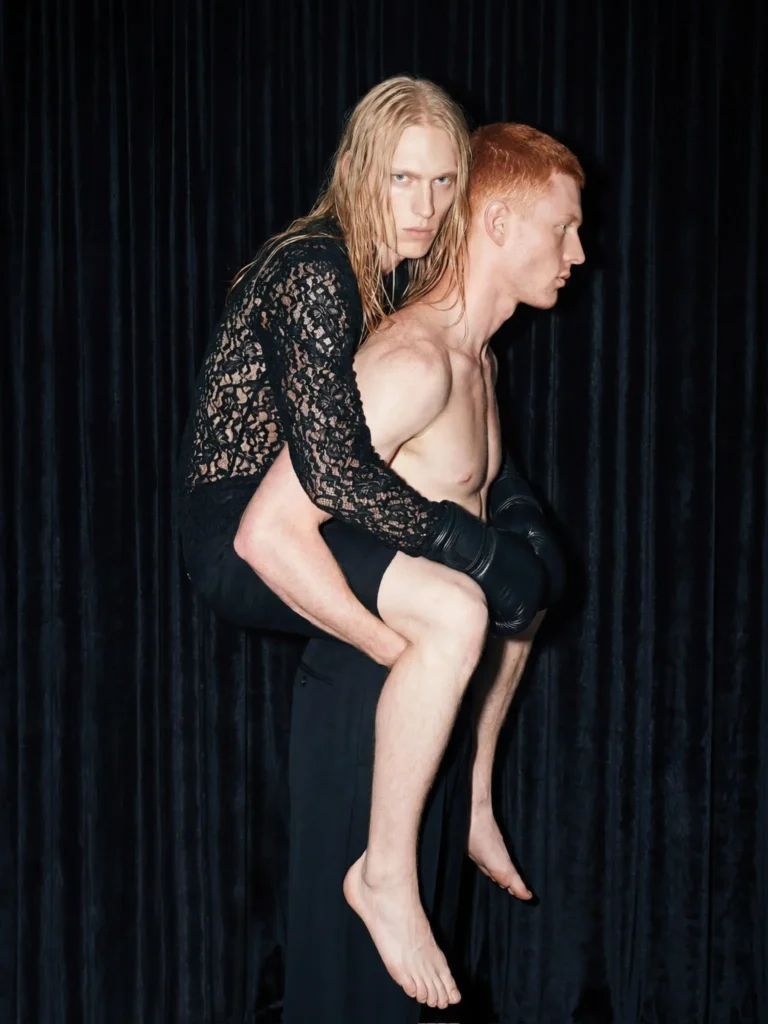
When JLS first appeared, it caused genuine controversy within the Japanese industry — not because it was strange, but because the combination of classical tailoring and that precise physical force did not fit any existing framework. Twenty-three years later, those frameworks have caught up. What once appeared anomalous now reads as a fully established position — one the brand has held without deviation since the beginning.
“What holds for JLS now is to give confidence and courage to the people who wear our clothes.”
Twenty-three years in, the vision has neither softened nor simplified. The silhouettes remain long, taut, poised between defense and elegance. And now, in Yanagawa’s own words, the purpose is clear: not aesthetic consistency for its own sake, but something more immediate and human.
Clothes that make the wearer feel stronger. In the end, that has always been the purpose of John Lawrence Sullivan’s armor: not protection from the world, but the confidence to enter it.
Leave a Reply